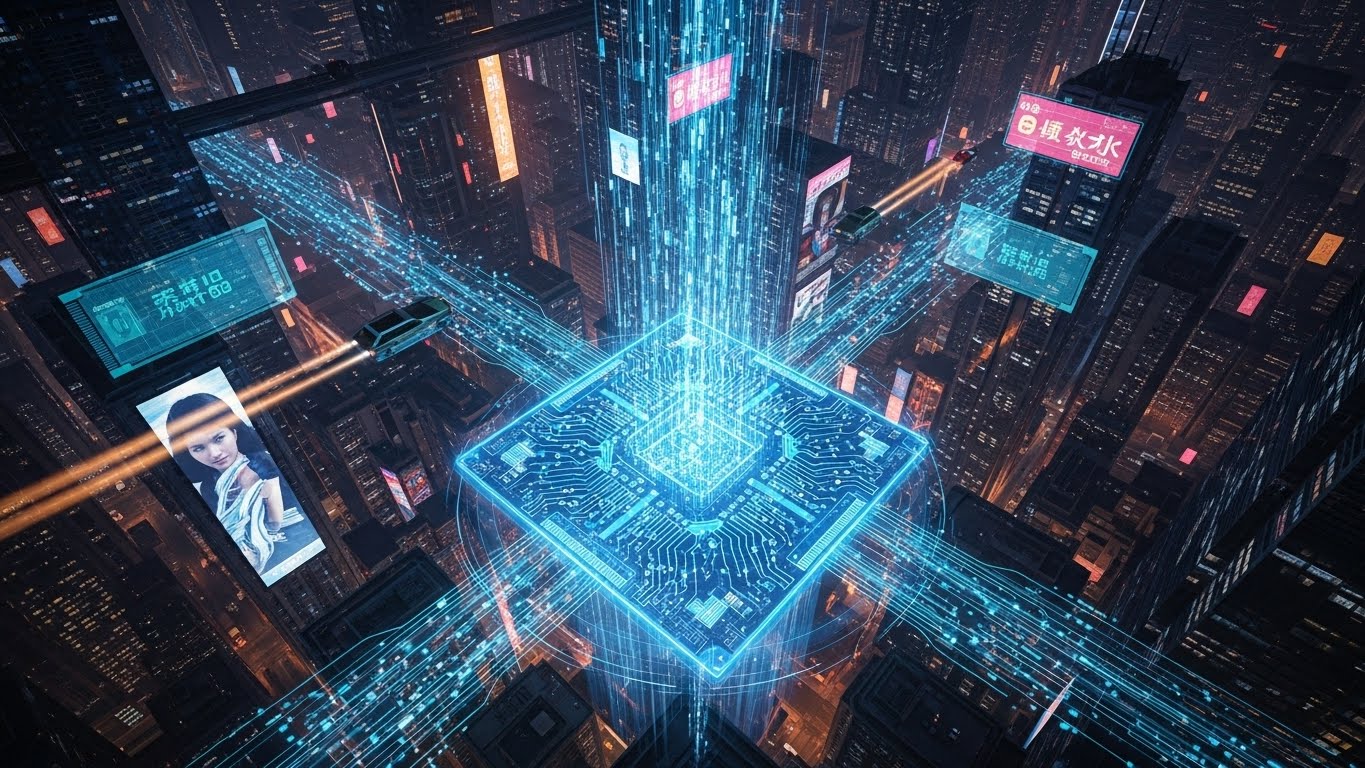
The Future of Technology: Innovations Shaping Tomorrow’s World
Technology is the backbone of modern civilization, driving change, solving problems, and opening doors to new possibilities. Over the last few decades, we’ve witnessed incredible technological advances that have revolutionized how we work, communicate, learn, and even think. The rapid pace of technological innovation shows no signs of slowing down, and as we look ahead, it’s clear that we are standing on the edge of yet another technological renaissance. But what exactly does the future of technology hold? How will emerging trends impact our daily lives, industries, and societies? In this post, we’ll explore the key technological innovations that are shaping tomorrow’s world, from artificial intelligence to quantum computing, and the profound implications these advances will have on the future.
The Power of Artificial Intelligence: Transforming Every Industry
Artificial intelligence (AI) is one of the most exciting and transformative fields of technology today. At its core, AI refers to the simulation of human intelligence in machines that are capable of learning, reasoning, and problem-solving. While AI has already made its presence felt in various sectors, from self-driving cars to voice assistants, its potential is far from fully realized. In the coming years, AI is set to completely revolutionize industries across the board.
In healthcare, AI algorithms are being used to analyze medical images, assist in diagnostics, and predict patient outcomes. AI-driven tools can process vast amounts of data in seconds, offering insights that would be impossible for humans to uncover in a reasonable amount of time. With the ability to detect early signs of disease, AI is making preventative healthcare a reality, allowing for quicker, more accurate diagnoses and better treatment outcomes.
AI is also playing a pivotal role in business. From supply chain management to personalized marketing, AI is being used to optimize operations, reduce costs, and enhance customer experiences. Machine learning algorithms can analyze consumer behavior, predict trends, and automate tasks that traditionally required human intervention. This automation is transforming industries, making businesses more efficient and competitive.
However, as AI continues to evolve, it raises important ethical and societal questions. The widespread automation of jobs poses challenges in terms of employment, as certain roles may become obsolete. There are also concerns around data privacy, algorithmic bias, and the accountability of AI-driven decisions. As we move forward, it will be crucial to strike a balance between harnessing the power of AI and ensuring that its use is ethical, transparent, and beneficial to society as a whole.
Blockchain: The Future of Secure Transactions and Data Integrity
Blockchain technology, originally introduced as the underlying infrastructure for cryptocurrencies like Bitcoin, is emerging as one of the most promising technologies for the future. At its most basic level, blockchain is a decentralized and immutable digital ledger that records transactions in a secure and transparent manner. It offers the potential to revolutionize everything from finance to supply chains to voting systems.
In the financial sector, blockchain can help reduce transaction fees and improve the speed and security of cross-border payments. Traditional banking systems often involve intermediaries that slow down transactions and introduce the possibility of fraud or errors. Blockchain removes these intermediaries, allowing for peer-to-peer transactions that are faster, more transparent, and less costly. This could democratize access to financial services, particularly for people in underserved regions where banking infrastructure is limited.
Beyond finance, blockchain has the potential to transform industries such as supply chain management. By providing a secure, transparent way to track products from production to delivery, blockchain can ensure that goods are ethically sourced, tamper-proof, and accurately accounted for. For instance, in the food industry, blockchain could trace the origins of products, making it easier to verify claims about sustainability or quality.
Additionally, blockchain could play a major role in voting systems. Traditional voting methods are often criticized for being vulnerable to fraud or manipulation. Blockchain’s decentralized and immutable nature makes it a perfect fit for creating secure, transparent voting systems that could help restore trust in democratic processes.
While blockchain holds tremendous promise, widespread adoption is still a work in progress. The scalability of blockchain networks, energy consumption concerns, and regulatory issues are all challenges that need to be addressed. Nonetheless, the future of blockchain looks incredibly bright, and its applications will likely continue to expand in ways we can’t yet fully predict.
5G: Powering the Next Generation of Connectivity
The rollout of 5G technology is expected to change the way we connect to the internet and each other. 5G promises faster speeds, lower latency, and a more reliable connection compared to previous generations of wireless technology. While 4G has already brought about significant changes in how we use mobile devices and access the internet, 5G is poised to take this a step further by enabling new applications and services that were previously impossible or impractical.
One of the most exciting possibilities of 5G is the expansion of the Internet of Things (IoT). The IoT refers to the network of devices, sensors, and objects that communicate with each other through the internet. 5G’s high bandwidth and low latency will allow millions of devices to connect simultaneously without compromising performance. This will facilitate the development of smarter cities, where everything from traffic lights to waste management systems is connected and optimized in real-time.
In healthcare, 5G will enable telemedicine and remote surgeries to reach new heights. With virtually no lag and ultra-fast speeds, doctors will be able to perform complex procedures remotely, using robotic surgery tools that can be controlled with incredible precision. Similarly, the 5G network will help improve access to healthcare in underserved or remote areas by enabling real-time consultations, diagnostics, and monitoring.
The impact of 5G is also set to revolutionize entertainment and media. With the ability to stream high-quality video content with minimal buffering, 5G will support next-gen applications such as augmented reality (AR) and virtual reality (VR). For instance, consumers could experience immersive, 360-degree video streams of live events or explore virtual environments with unprecedented clarity and detail. 5G will also allow for seamless integration of AI and IoT in areas such as autonomous driving, creating safer and more efficient transportation networks.
As with any new technology, 5G comes with its own set of challenges, particularly in terms of infrastructure and security. The need to build out new networks and ensure that 5G coverage is reliable in both urban and rural areas is a significant hurdle. Moreover, as more devices become connected to 5G networks, the risk of cyberattacks and data breaches will increase, making cybersecurity a critical consideration.
Quantum Computing: Unlocking New Frontiers of Processing Power
While artificial intelligence and blockchain have already started making an impact on industries, quantum computing represents an entirely new frontier in computational power. Quantum computers leverage the principles of quantum mechanics, allowing them to process information in fundamentally different ways than classical computers. Instead of using bits to represent data as either 0 or 1, quantum computers use qubits, which can represent multiple states simultaneously, leading to exponential increases in processing power.
This leap in computational power could have far-reaching implications for fields ranging from cryptography to drug discovery. For instance, quantum computers could break existing encryption methods, leading to the development of more secure encryption protocols. In pharmaceuticals, quantum computers could simulate molecular interactions with incredible precision, enabling the rapid discovery of new drugs and treatments.
However, quantum computing is still in its infancy. While researchers have made significant progress, building a practical, large-scale quantum computer that can outperform classical computers in real-world applications is still a major challenge. Moreover, the shift toward quantum computing will require new approaches to cybersecurity and encryption, as existing systems may become vulnerable to quantum attacks.
Despite these challenges, the potential of quantum computing is undeniable. As research and development in this field continue to advance, we can expect quantum computers to tackle complex problems in ways that were once unimaginable, driving innovation across industries.
The Rise of Biotechnology: Merging Technology and Healthcare
Another area where technology is making incredible strides is in biotechnology. The convergence of technology and biology is leading to groundbreaking innovations in healthcare, from personalized medicine to gene editing. One of the most notable advancements in this space is CRISPR-Cas9, a gene-editing tool that allows scientists to modify DNA with unprecedented precision. This technology holds the potential to treat genetic disorders, prevent certain types of cancer, and even enhance human capabilities.
Biotechnology is also making strides in creating lab-grown organs, providing hope for patients waiting for transplants. With the help of advanced technology, scientists are working to develop functional tissues and organs using stem cells, which could one day eliminate the need for donor organs entirely.
Additionally, wearables and implantable devices are helping to monitor and improve health in real-time. Smartwatches, fitness trackers, and medical devices can now monitor everything from heart rate to blood sugar levels, alerting individuals and doctors to potential health issues before they become critical.
As biotechnology continues to evolve, it will likely become an integral part of our daily lives, offering new ways to prevent, treat, and even enhance human health. However, the ethical implications of technologies such as gene editing and human enhancement will need careful consideration to ensure that they are used responsibly.
Conclusion: The Tech-Driven Future Is Now
Technology is advancing at a breakneck pace, and we are on the cusp of a future that is defined by unprecedented innovation. From AI to blockchain, 5G to quantum computing, and biotechnology to IoT, we are witnessing the rise of technologies that will reshape industries and redefine our way of life. While these advancements hold incredible promise, they also come with challenges that must be navigated thoughtfully and responsibly.
The key to a successful tech-driven future lies in how we harness these innovations to solve global problems, improve quality of life, and create a more sustainable and equitable world. As we embrace the potential of technology, we must also remain mindful of its impact on society, ensuring that its benefits are accessible to all and that its risks are carefully managed. The future is tech-driven, and it is up to us to shape it in a way that enhances human potential and fosters a better tomorrow for everyone