
Tech Horizons: How Emerging Technologies Are Reshaping Our World
Introduction
Technology has always been a catalyst for change, driving innovation, productivity, and transformation across industries. The 21st century has witnessed an unprecedented acceleration of technological advancements that are redefining how we live, work, and interact. From artificial intelligence to virtual reality, these emerging technologies are not just tools; they are shaping the future of society. Understanding these trends is crucial for both individuals and businesses to remain competitive and adaptable in a world defined by constant change. This blog explores the most influential technologies of our time, their impact, and the exciting possibilities they bring.
Artificial Intelligence: Transforming Intelligence Itself
Artificial intelligence (AI) is no longer a futuristic concept; it is a reality that permeates everyday life. At its core, AI refers to the capability of machines to mimic human intelligence, learn from experience, and make decisions. AI applications range from predictive analytics in businesses to sophisticated virtual assistants that understand and respond to human queries.
The power of AI lies in its ability to process massive amounts of data at incredible speeds. In healthcare, AI algorithms can analyze medical records and imaging data to detect diseases with remarkable accuracy. In finance, AI-driven models help identify market trends, manage risks, and detect fraudulent activities. Retail businesses use AI to provide personalized recommendations, optimizing the customer experience and boosting sales.
Beyond practical applications, AI is also advancing creative fields. AI-generated art, music, and writing demonstrate how machines can augment human creativity. As AI technology continues to evolve, its integration into daily life will deepen, fundamentally changing how we interact with digital systems and the world around us.
Automation and Robotics: Efficiency Redefined
Automation and robotics are revolutionizing industries by performing repetitive and labor-intensive tasks with precision and speed. Robotics has expanded far beyond traditional manufacturing, impacting healthcare, logistics, agriculture, and even services.
In manufacturing, robots increase production efficiency and maintain consistent quality. In healthcare, robotic-assisted surgeries improve surgical precision and reduce recovery times. Logistics companies employ autonomous robots to manage warehouses and streamline supply chains, ensuring faster delivery of goods.
The impact of automation on employment is complex. While some traditional jobs may decline, automation creates opportunities in technology management, maintenance, and programming. It also allows humans to focus on tasks requiring creativity, strategic thinking, and emotional intelligence—areas where machines are less capable.
Automation is not only changing industries but also shaping the way societies function. As machines take over routine work, humans are free to pursue higher-order tasks that add greater value, driving economic growth and innovation.
Quantum Computing: Redefining Computational Limits
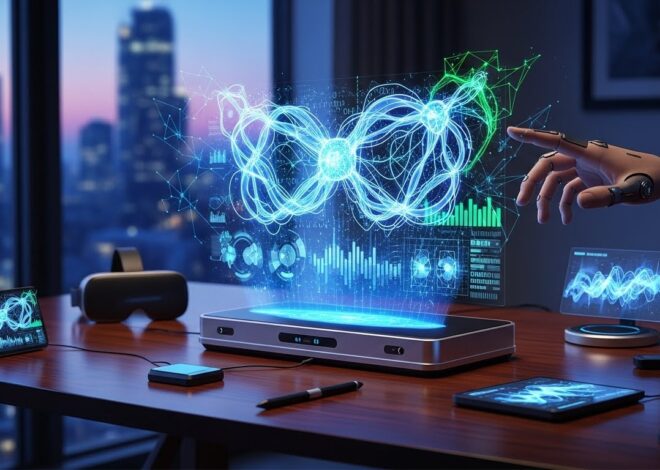
Quantum computing represents a significant leap beyond traditional computing, leveraging the principles of quantum mechanics to process information in new ways. Unlike classical computers that use binary bits, quantum computers utilize qubits, which can exist in multiple states simultaneously, enabling parallel computation on an unprecedented scale.
The implications of quantum computing are profound. It has the potential to solve problems that are currently intractable for classical computers, including complex simulations in chemistry and physics, optimization problems, and cryptographic challenges. For example, quantum algorithms could revolutionize drug discovery by modeling molecular interactions far more efficiently than traditional methods.
While quantum computing is still emerging, research and experimentation are progressing rapidly. The future of this technology promises breakthroughs that could redefine industries, enhance cybersecurity, and accelerate scientific discovery in ways that were once unimaginable.
Virtual Reality and Augmented Reality: Merging Worlds
Virtual reality (VR) and augmented reality (AR) are transforming how we perceive and interact with our environment. VR immerses users in entirely digital environments, while AR overlays digital elements onto the physical world, creating blended experiences that enhance reality.
Gaming has been a primary driver of VR adoption, offering immersive experiences that transport players to virtual worlds. AR, on the other hand, has practical applications in industries like education, healthcare, and retail. In education, AR can visualize complex scientific concepts, making learning interactive and engaging. In healthcare, VR assists in medical training, therapy, and rehabilitation, while AR can provide surgeons with real-time information during procedures.
The potential of VR and AR extends beyond entertainment and professional applications. They are shaping social interactions, remote collaboration, and experiential marketing, creating opportunities for businesses and individuals to engage in ways previously unimaginable.
5G Connectivity: Accelerating the Digital Future
The rollout of 5G networks is transforming connectivity and enabling new technological possibilities. 5G offers faster internet speeds, lower latency, and the capacity to connect more devices simultaneously, laying the foundation for advanced digital ecosystems.
Industries are leveraging 5G to implement real-time data processing and automation. In transportation, 5G supports autonomous vehicles that communicate with each other and infrastructure for improved safety. Smart cities rely on 5G to manage traffic systems, energy consumption, and public safety in real time. In healthcare, telemedicine and remote surgeries benefit from the high reliability and speed of 5G networks.
For consumers, 5G enhances everyday experiences, from streaming high-quality media to immersive AR and VR applications. It also enables the growth of the Internet of Things, connecting billions of devices to improve convenience, efficiency, and decision-making across homes, workplaces, and cities.
Blockchain Technology: Security and Transparency Reimagined
Blockchain technology offers a decentralized approach to managing data, providing security, transparency, and trust without the need for central authorities. Although popularized by cryptocurrencies, blockchain’s potential extends far beyond digital currencies.
Supply chains are a prime example of blockchain application. By providing a tamper-proof record of transactions, blockchain ensures product authenticity and traceability, reducing fraud and inefficiencies. In healthcare, blockchain can secure patient data, improving privacy and interoperability across medical systems. Financial services use blockchain to streamline transactions, reduce costs, and enhance security.
Decentralized applications built on blockchain networks have the potential to redefine digital services, creating ecosystems where data ownership and privacy are prioritized. As adoption grows, blockchain could transform industries that rely heavily on trust and transparency.
Artificial Reality and Human Augmentation: Expanding Human Potential
Emerging technologies are not only changing the digital world but also the human experience itself. Wearable devices, brain-computer interfaces, and exoskeletons are examples of human augmentation technologies designed to enhance physical and cognitive capabilities.
Wearables track health metrics, provide real-time feedback, and assist with lifestyle management. Brain-computer interfaces explore direct communication between the human brain and machines, opening possibilities for medical treatment and enhanced interaction with technology. Exoskeletons help individuals with mobility challenges regain movement, transforming rehabilitation and physical labor.
Human augmentation represents a frontier where technology integrates seamlessly with biology, offering opportunities for improving quality of life, extending human capabilities, and pushing the boundaries of what is possible.
Ethical Considerations in a Tech-Driven World
As technology evolves at a rapid pace, ethical considerations become increasingly important. Issues such as data privacy, algorithmic bias, cybersecurity, and the societal impact of automation require careful attention. Developers, policymakers, and organizations must ensure that technological advancement does not come at the expense of human rights, equity, or sustainability.
Responsible innovation includes implementing ethical frameworks, transparency in AI decision-making, and prioritizing accessibility. Technology should enhance human potential, not exacerbate inequality or compromise safety.
Conclusion
The future of technology is a dynamic landscape full of potential and challenges. Artificial intelligence, quantum computing, automation, blockchain, and immersive realities are reshaping industries, enhancing human capabilities, and creating new opportunities for growth and innovation. Connectivity through 5G and advancements in human augmentation further amplify these transformations, bringing the future closer every day.
Adapting to this technological evolution requires understanding, engagement, and ethical mindfulness. By embracing innovation while considering societal implications, humanity can leverage technology to solve complex problems, improve quality of life, and build a sustainable, inclusive future.
In a world driven by innovation, staying informed and adaptable is no longer optional—it is essential. The horizon of technology is vast, and its potential is limited only by our imagination and commitment to responsible progress.